Ceasefire has been declared in Gaza, but hostilities continue and aid remains restricted. Winter conditions are putting families further at risk as cold weather and flooding damage infrastructure. Unrestricted aid access is urgently needed to stop the spread of famine.
Why Infants in Gaza Face Extreme Risks in Crisis Conditions
In crisis settings such as Gaza, where families have been repeatedly displaced and shelters are overcrowded and flooded with rain, everyday survival requires constant vigilance, even in a ceasefire. Under these conditions, infants and young children face the highest risk of illness, malnutrition, and developmental delays.
At the same time, caregivers experience extreme stress, health risks, and limited access to health services – factors that directly affect babies’ survival and development. Without safe, supportive spaces that protect both infants and those who care for them, the earliest and most fragile stage of life becomes a daily struggle for survival rather than a foundation for healthy growth.
What Are Baby Safe Spaces?
Baby Safe Spaces are safe settings where mothers and caregivers are supported to best take care of their children in times of crisis. Caregivers can find specialized care and tools needed to protect their children’s health. Since the launch of Action Against Hunger’s Mother Baby Friendly Spaces in March 2025, our teams have reached nearly 10,000 mothers and caregivers with support aimed at:
increasing rates of exclusive breastfeeding,
preventing and combatting malnutrition, identifying early of acute malnutrition,
promoting children’s physical and cognitive growth,
and expediting treatment referrals.
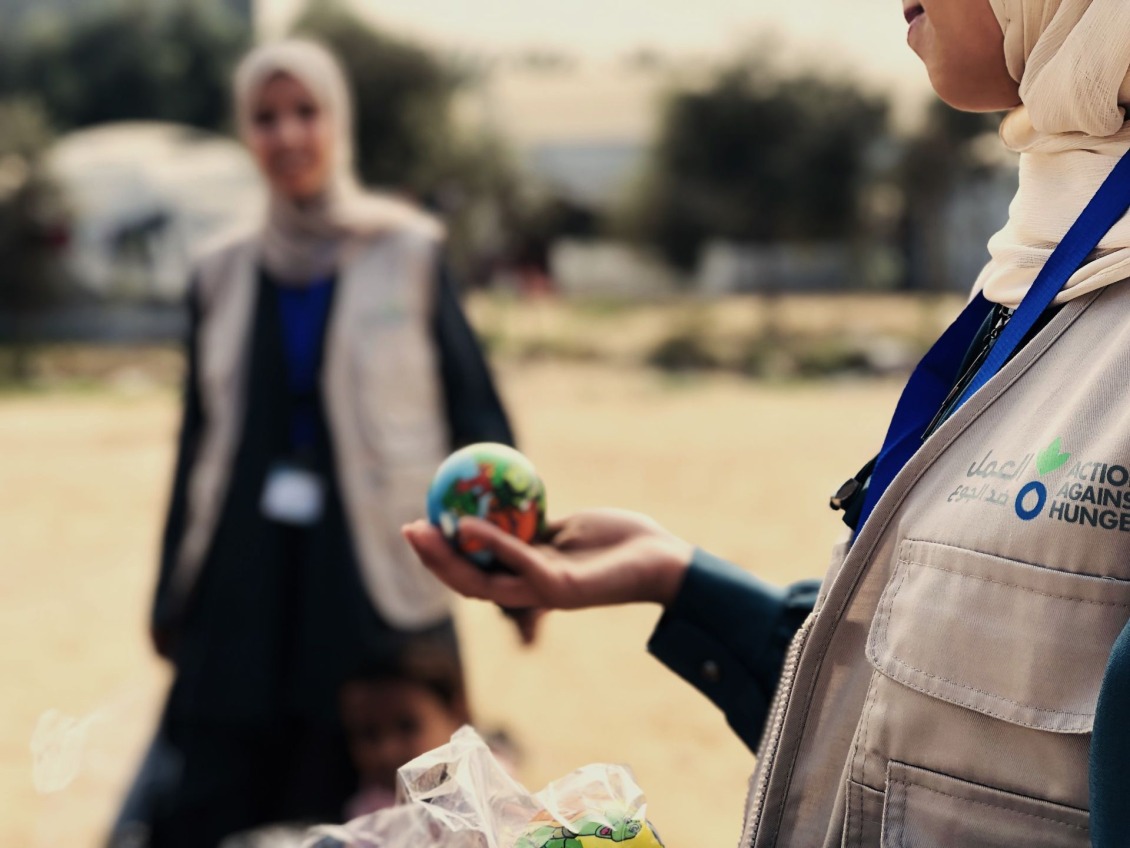
A staff member holds a child’s toy.
Malnutrition Screening in Gaza: Early Detection Saves Lives
In many cases, Baby Safe Spaces are the first reliable point of healthcare for infants in Gaza. Trained Action Against Hunger staff monitor babies’ growth, screen for early warning signs of illness or malnutrition, and educate caregivers on how to recognize early symptoms.
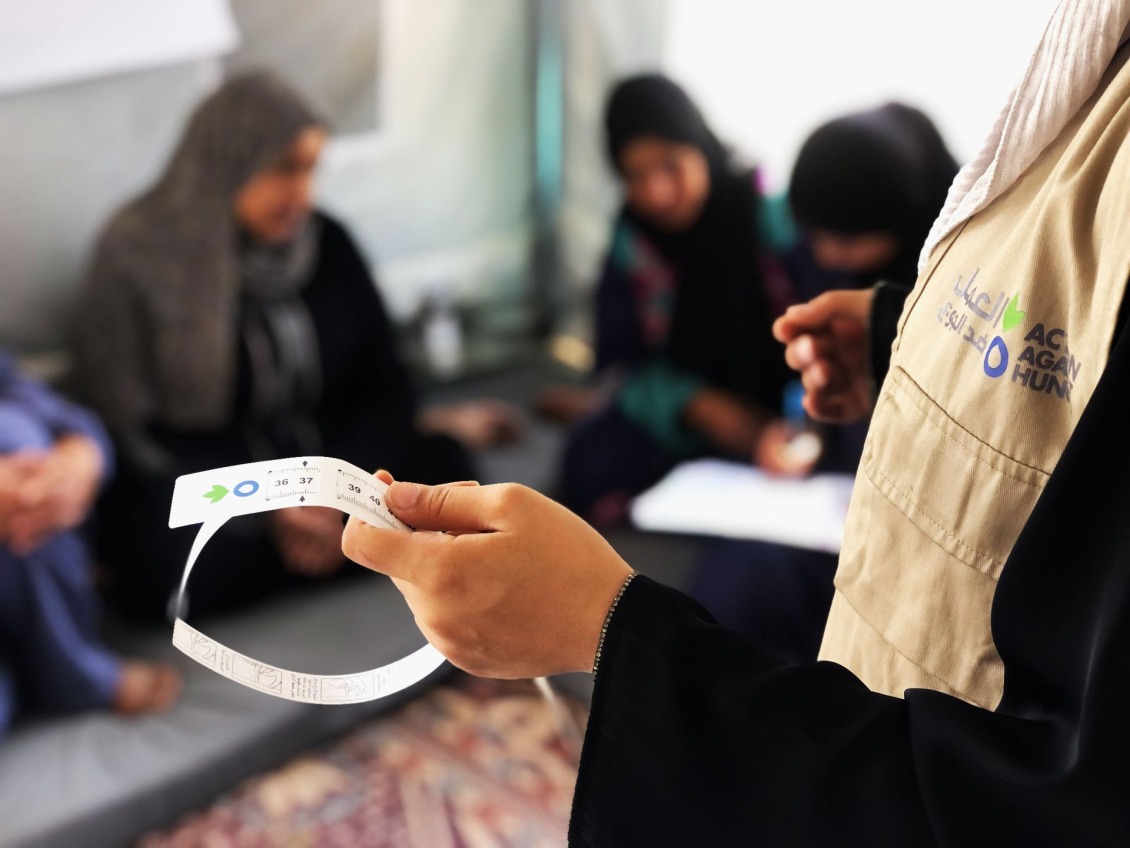
Mothers are taught how to perform mid-upper arm circumference (MUAC) measurements with a MUAC band — a simple, lifesaving tool for early detection of malnutrition. This task is often reserved for trained staff, but mothers in Gaza are taught to do it themselves due to the difficult conditions they face, including repeated displacement and frequently damaged or inaccessible healthcare facilities.
A MUAC band helps mothers spot malnutrition early.
Early detection is critical to improving a child’s chances of surviving malnutrition because treatment is far more effective when started promptly. Identifying warning signs early can not only reduce the severity of illness but also shorten the time needed for recovery. In fragile contexts where treatment options are scarce, rapid detection and prevention become essential, lifesaving measures.
Improving Infant Feeding and Nutrition in Crisis Settings
Living in crowded shelters leaves caregivers without privacy or the consistent routines required for breastfeeding. Mothers in Gaza are often isolated from their social support networks and have little access to reliable information or proper sanitation.
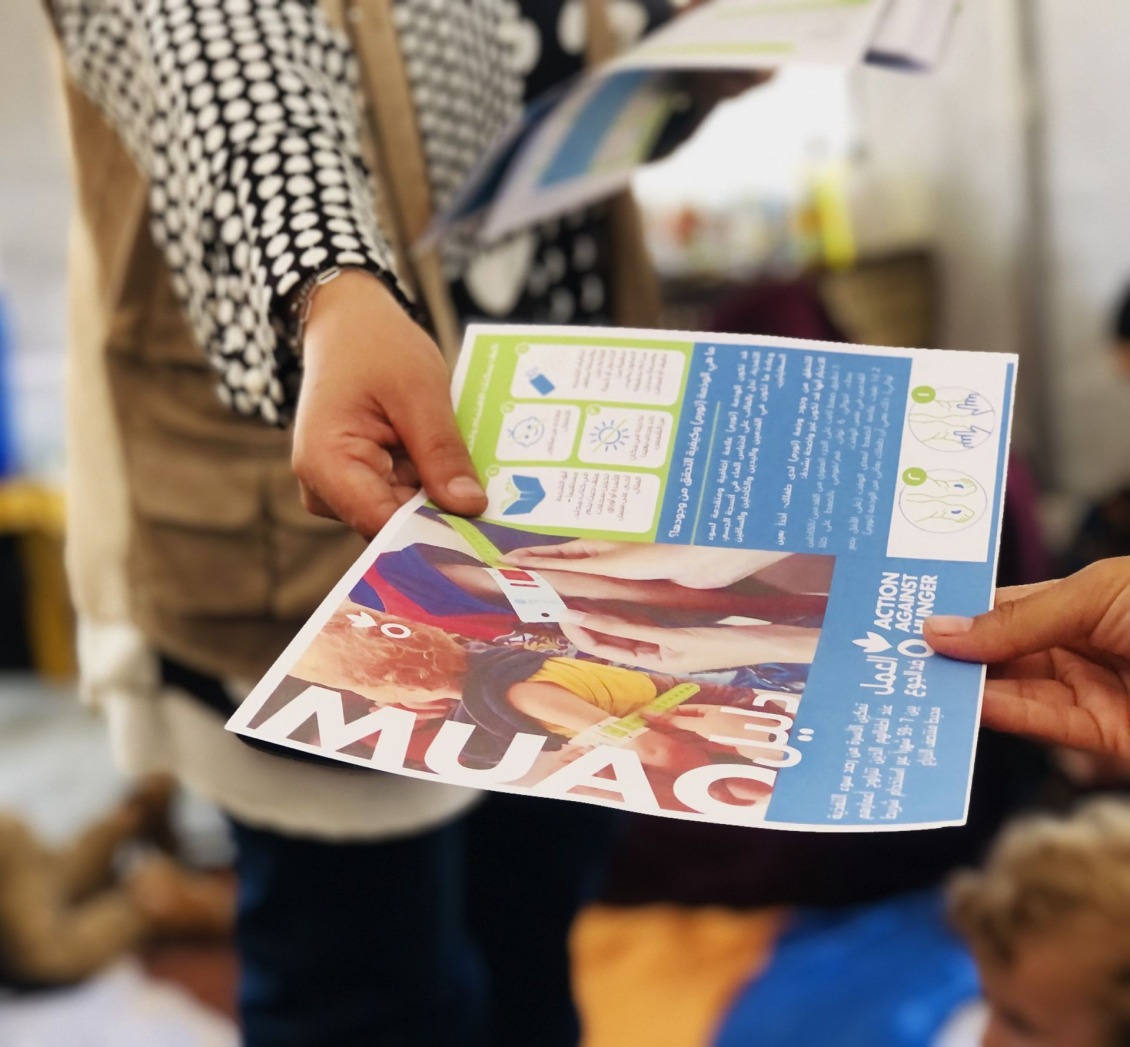
Educational materials are provided at Baby Safe Spaces.
Breastfeeding is one of the most effective ways to protect infant health, providing all the nutrients a baby needs in the first months of life, according to the World Health Organization. In conflict settings, where clean water, stable food supplies, and healthcare are often limited or disrupted, breastfeeding becomes even more critical. It offers a safe, reliable source of nutrition and hydration, reducing the risks such as diarrhea that come with formula preparation in unsafe conditions. However, breastfeeding can become difficult when mothers face malnutrition, trauma, or other challenges.
“The needs of the women are numerous. We try as much as possible to provide what is needed – hygiene kits, psychosocial support sessions, child-friendly spaces,” explained Fatima*, one of Action Against Hunger’s Nutrition Advisors in Gaza City. “Many of the mothers are facing extremely difficult circumstances, which we try to alleviate by ensuring the continuity of these services, particularly in the north, where supplies are limited.”
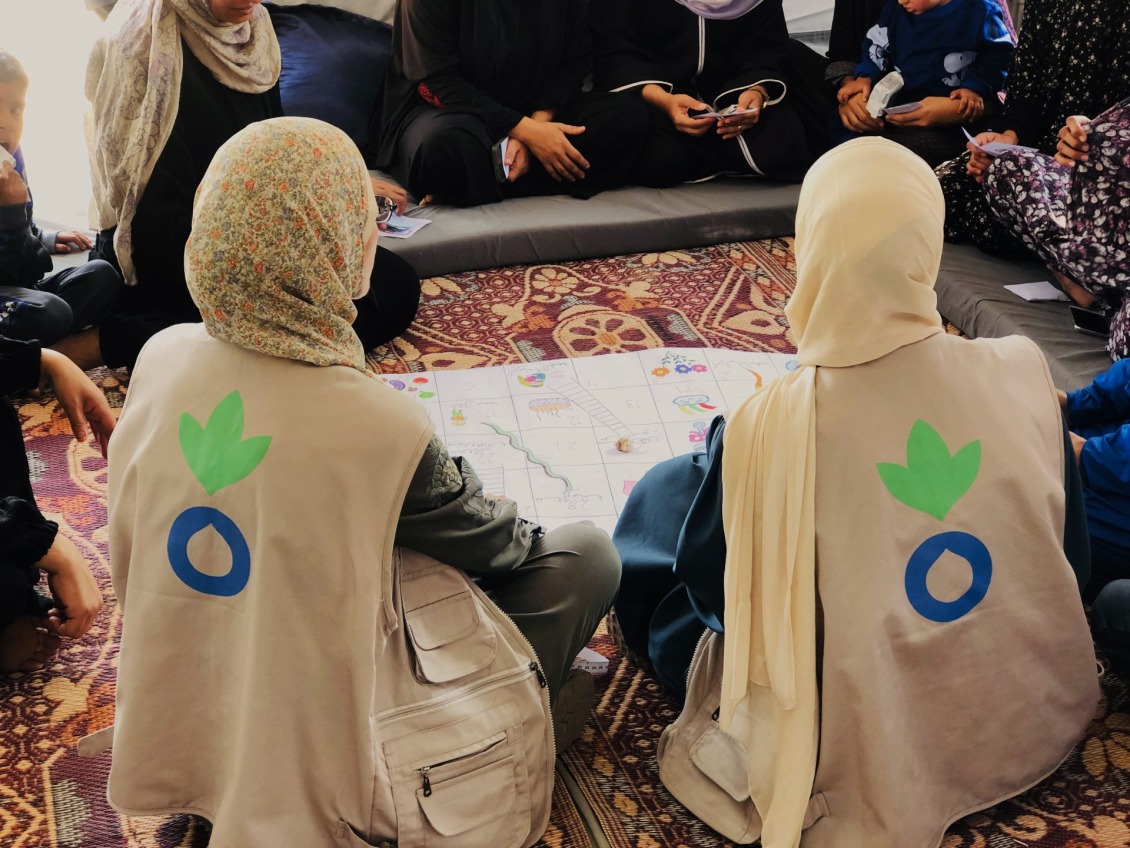
Baby Safe Spaces create designated time and space for mothers to learn practical techniques for increasing milk production, practice safe complementary feeding, and avoid common nutrition risks in emergencies. Staff provide individual counselling, and women support and teach each other.
Women can get learn from staff and each other at Baby Safe Spaces.
“When I come here, I feel safe,” said Aliya, a mother who regularly visits one of Action Against Hunger’s Baby-Safe Spaces in Gaza. “I feel as though there is someone who cares about us and gives us their attention and time. These sessions give me the little strength that’s needed to continue.”
Supporting Mothers’ Mental Health and Reducing Stress
In the safe environment of a Mother- and Baby-Friendly Space, mothers and caregivers can ask questions, share fears, and rebuild a sense of agency. Peer-to-peer support sessions, group psychosocial support sessions, and awareness sessions help mothers cope with trauma and learn about psychological wellbeing for their children.
“The mothers and caregivers often tell us that they need more of these sessions because it gives them a break from the psychological pressure they face under violence and blockade,” said Fatima.
With this support, mothers report feeling seen, valued, and more confident in caring for their infants. The positive impact extends to their babies, improving nutrition, bonding, and healthy development.
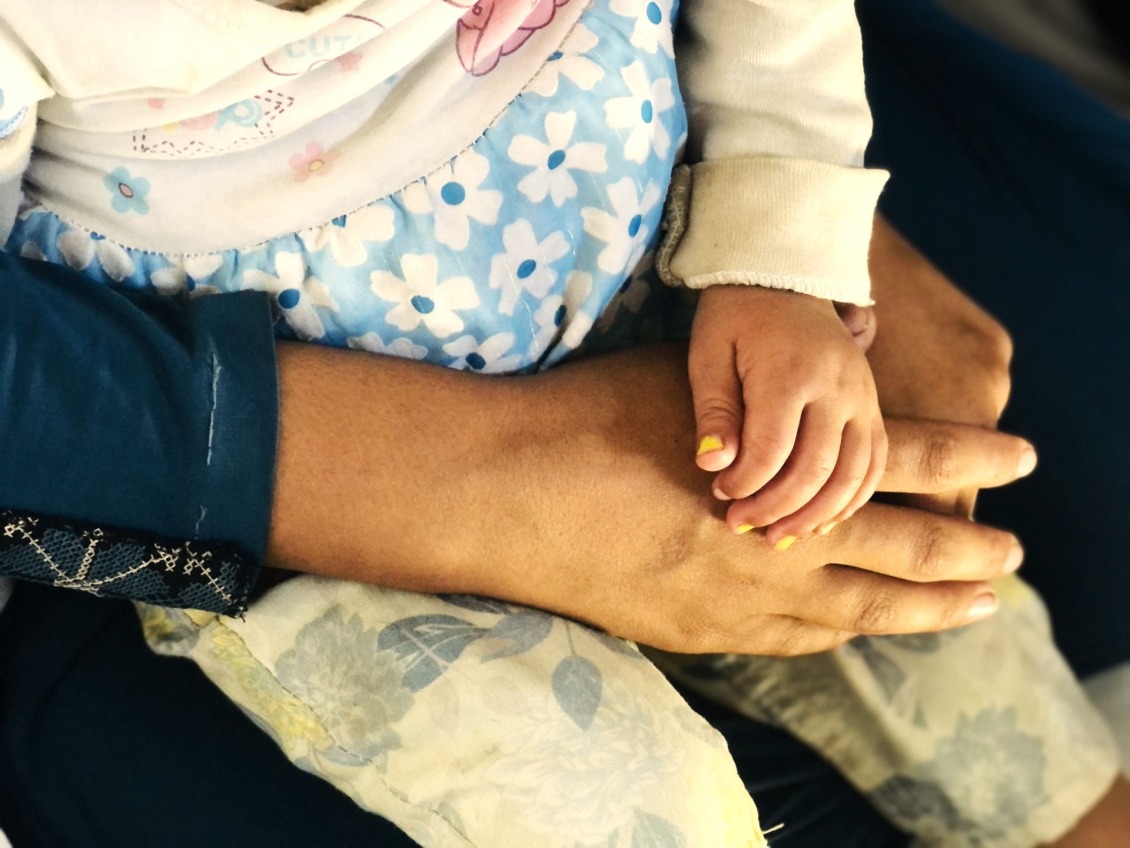
A mother holds her child at a Baby Safe Space.
“Women need to be heard more, and we try to do that. We want each woman to feel valued,” said Fatima.
This support is especially important when parents are fighting daily to keep their children healthy — parents like Aliya. After enduring a difficult pregnancy amid conflict and displacement, she has just one wish:
“I want safety for my children. A clean tent. Clothes for my baby. A place where my children won’t fall sick from the environment around them. I want my son to grow up to see a life better than this one – a life without violence, without the constant struggle to keep him alive, without hunger.”
While Baby Safe Spaces cannot change the challenging circumstances parents face, they can give support and the tools needed to help their children grow healthy and look toward a better future.
Together, We Can End Hunger
We save the lives of children and their families. We will never give up. Until the world is free from hunger.